
Embroidery Tips
Get the Best Embroidery Results
For clean, accurate, and professional embroidery, follow our recommended guidelines when using ready-made designs or custom digitizing services. Proper fabric, stabiliser, needle, thread, and machine settings can make a major difference in the final result.
Need help? Contact the Digitizing Crew team anytime.
Contact Us
01
Keep the Fabric Secure
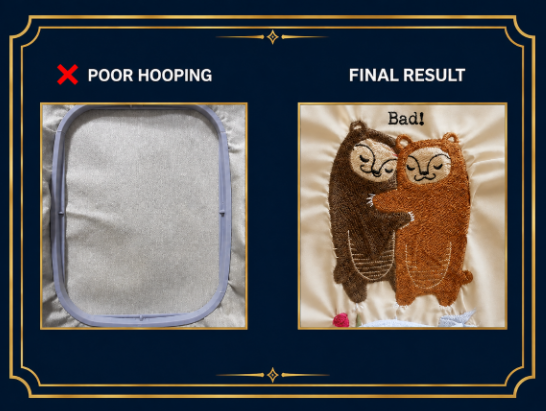
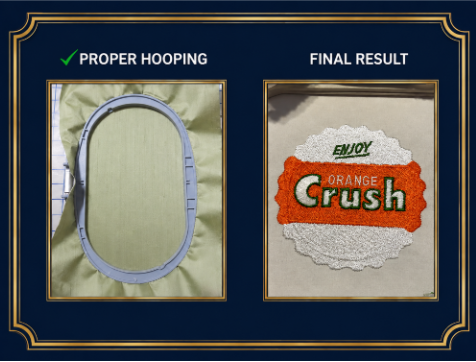
Make sure the fabric is firmly hooped and properly tensioned so it does not shift or loosen while the machine is stitching.
02
Use a Sharp Embroidery Needle
Always use a sharp embroidery needle with a larger eye. The sharp tip passes easily through tightly woven fabrics and felt, while the larger eye allows embroidery thread to move smoothly and reduces thread breakage.
| Fabric Type | Recommended Needle | Recommended Thread | Recommended Stabilizer |
|---|---|---|---|
| Cotton (light/medium) | 75/11 or 80/12 Embroidery Needle | Rayon or Polyester (40 wt) | Use a tear-away stabilizer; it works well with most designs. |
| Linen | 80/12 Embroidery or Universal | Rayon, Cotton, or Polyester | Use medium-weight stabilizer; adjust tension as needed. |
| Silk | 70/10 Microtex or Embroidery | Fine Rayon or Polyester (60 wt) | Use a cut-away stabilizer; test design to prevent puckering. |
| Denim / Heavy Cotton | 90/14 or 100/16 Embroidery | Polyester or Heavy Cotton Thread | Use a strong stabilizer (cut-away); reduce speed slightly. |
| Knits / Stretch Fabric | Ballpoint 75/11 or Stretch Needle | Polyester or Rayon (40 wt) | Use a cut-away stabilizer to prevent distortion. |
| Fleece / Terry Cloth | 90/14 Embroidery Needle | Polyester (40 wt) with topper | Use a water-soluble topper to prevent sinking stitches. |
| Organza / Sheer Fabrics | 65/9 or 70/10 Microtex | Fine Polyester or Rayon (60 wt) | Use a light cut-away or wash-away stabilizer. |
| Leather / Vinyl | 90/14 Leather Needle | Polyester or Nylon Thread | Use tear-away stabilizer; slower speed to prevent tears. |
| Velvet / Pile Fabrics | 80/12 or 90/14 Embroidery | Polyester with topper | Use a water-soluble topper to lift the design above the pile. |
| Jersey / T-Shirts | Ballpoint 75/11 Needle | Polyester or Rayon (40 wt) | Always use a cut-away stabilizer; avoid dense designs. |
03
Check the Bobbin and Thread Tension
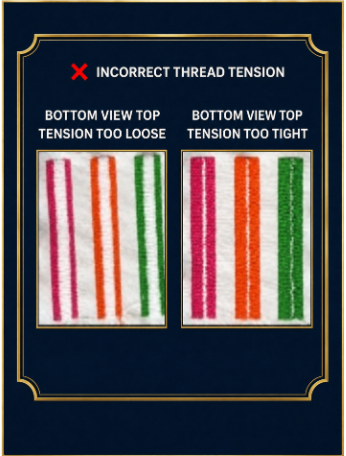
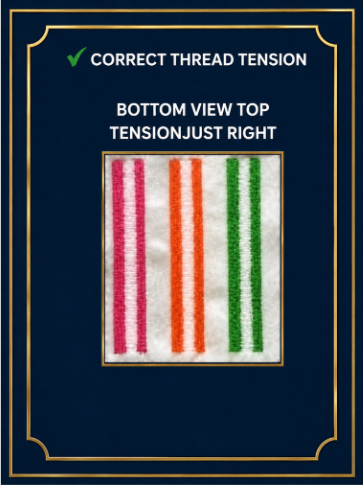
Proper bobbin tension is essential for clean, consistent embroidery. If the tension is too tight, the bobbin thread may appear on the front of the fabric and cause frequent thread breaks.
For best results, keep the bobbin tension between 18–22 grams for standard fabrics and up to 25 grams for caps.
04
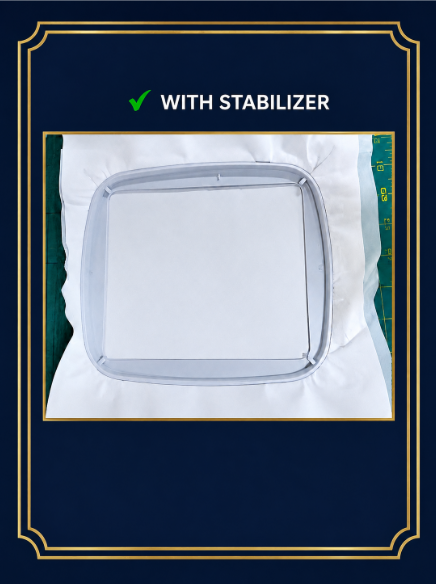
Use Full-Hoop Backing
Backing, also known as stabiliser, provides essential support during embroidery and helps prevent the fabric from shifting, stretching, or puckering. For the best results, make sure the backing fully covers the entire hooped area behind the fabric. 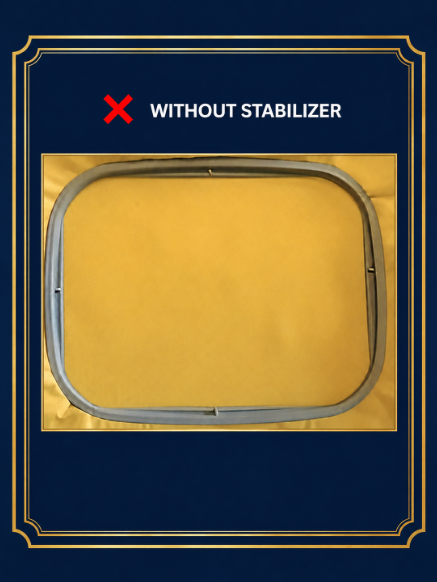
05
Choose the Correct Backing for the Fabric
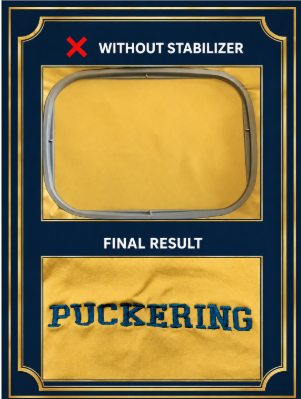
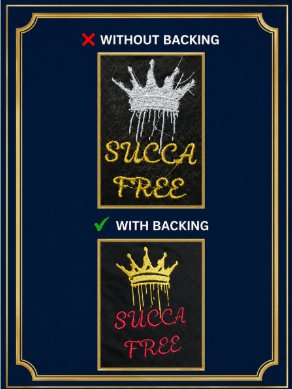
Backing, also known as stabiliser, is placed behind the fabric to support the stitches and prevent puckering, stretching, or shifting during embroidery. Most machine embroidery projects require backing for a clean and professional finish.Choose the backing according to the fabric and design:
Cut-away backing: Best for stretchy, knitted, soft, or frequently washed garments such as polo shirts, T-shirts, and sweatshirts.
Tear-away backing: Suitable for stable, woven fabrics and designs with light to medium stitch density.
Also consider the fabric’s stability, stitch density, and washability. Stretchy or loose fabrics and dense designs usually require stronger backing, while firm fabrics may only need light or medium support. Backing is generally available in different weights:
Lightweight: 1–1.5 oz
Medium weight: 2–2.75 oz
Heavyweight: 3–3.5 oz
For the best results, always select a backing that provides enough support without making the finished embroidery too stiff.
06
Choose the Right Hoop Size
Always select a hoop that closely matches your design size and placement. For example, a design under 3.9 inches should be stitched in a 4 × 4 hoop rather than a larger hoop. Using an oversized hoop may leave the fabric too loose, which can cause shifting, puckering, and poor stitch quality.
07
Use Double Backing for Cotton Fabric
For cotton fabrics, use two layers of backing to provide extra stability and help prevent shifting or puckering during embroidery.
08
Use Water-Soluble Topping on Caps
Place a layer of water-soluble topping over the cap before embroidering. It helps keep the stitches clean, smooth, and clearly visible on the surface.
09
Use Topping on Fluffy Fabrics
For fluffy or textured fabrics, such as towels or fleece, use water-soluble topping over the fabric. This prevents stitches from sinking into the material and creates a cleaner finish.
10
Use Topping for Small Lettering
When embroidering small text or fine details, place water-soluble topping over the fabric. It helps improve stitch definition and keeps the lettering sharp and readable.
11
Tips to Achieve the Quality of Small Letters
For optimal quality when working with small letters, use a 65/9 needle paired with 60wt thread. Adjusting the machine to a slower speed can also improve the results.
| Fabric | Needle | Backing | Stitch Count / Design Type | Notes |
|---|---|---|---|---|
| Aida Cloth | 75/11 sharp point | 2.5 oz. cutaway | Any stitch count; both solid and open designs work well. | Pre-laundering is recommended on cotton fabrics to avoid puckering caused by shrinking. |
| Denim | 75/11 sharp point | 2.5 oz. cutaway | Medium to high-stitch-count designs. Both open and solid, stitch-filled designs appear well. | Tearaway stabilizer may be used to avoid backing showing through. Choose simple designs with low to medium stitch counts if using tearaway. |
| Felt | 75/11 sharp point | 2.5 oz. cutaway | Any stitch count; solid designs appear best. | Felt is a good choice for embroidering patches, as the edges don’t fray. |
| Flannel | 75/11 sharp point | 2.5 oz. cutaway | Any stitch count; both solid and open designs work well. | Pre-laundering is recommended on cotton fabrics to avoid puckering caused by shrinking. |
| Fleece | 75/11 sharp point | 2.5 oz. cutaway or tearaway | Any design will work well with cutaway; light, open designs work best if using a water-soluble stabilizer. | Heavyweight, water soluble stabilizer may be used in place of regular backing if you don’t want backing to show through on blankets. |
| Leather | 75/11 or 80/12 ball point on stiff or spongy leather; 70/10 or 80/12 sharp point on soft leather | 1.5 oz. tearaway or cutaway | Low-stitch-count designs; open designs work best. | Consider slowing down the speed of the machine. |
| Linen | 75/11 sharp point | 2.5 oz. cutaway | Low to medium-stitch-count designs. | Open, light designs work best on linen shirts. |
| Mesh | 75/11 sharp point | 3.5 oz. water-soluble stabilizer | Low to medium stitch count designs; solid designs appear best. | Consider using the same color bobbin thread as the top thread since the mesh is transparent. |
| Canvas | 75/11 sharp point | 2.5 oz. Cutaway or tear-away | Any stitch count; both solid and open designs work well. | Choose simple designs with low to medium stitch counts if using tearaway. |
| Chiffon | 75/11 sharp point | Heavyweight, water-soluble stabilizer | Light, open designs with lower stitch counts. High-stitch-count designs will cause puckering. | Heavy stitches, such as satin stitches, will work well as long as the design is open. Too much fill will cause stiffness. |
| Chenille | 75/11 sharp point | 2.5 oz. cutaway or tearaway stabilizer | Medium to high stitch-count designs. Solid, stitch-filled designs appear best. | Avoid light stitches such as running stitches that may get lost in textured fabric. |
| 100% Cotton | 75/11 sharp point | 1.5 to 2.5 oz. cutaway | Low to medium stitch-count designs, depending on thickness. Light, open for t-shirts; heavier, solid for sweats. | Pre-laundering is highly recommended to avoid puckering caused by shrinking. |
| 100% Polyester | 75/11 sharp point | 2.5 oz. poly mesh no-show cutaway backing | Low to medium-stitch-count designs; open designs with simple stitches are best for clothing. | Avoid high-density stitch-filled designs that will compromise performance qualities of the garment. |
| Velvet | 75/11 sharp point | 2.5 oz. cutaway | Any stitch count; stitch-filled designs appear best. | Avoid open designs and light stitches such as running stitches that may get lost in textured fabric. |
| Wool | 75/11 sharp point | 2.5 oz. cutaway | Any stitch count; stitch-filled designs appear best. | Avoid open designs and light stitches such as running stitches that may get lost in textured fabric. |
| Toilet Paper | 75/11 sharp point | 2.5 oz. cutaway backing | Low to medium-stitch-count designs; both stitch-filled and open designs work well. | Slow down the speed of the machine. Fold toilet paper three times for best results. |
| Terrycloth | 75/11 sharp point | 2.5 oz. cutaway or tearaway | Any stitch count; choose stitch-filled designs. | Avoid open designs and light stitches such as running stitches that may get lost in textured fabric. |